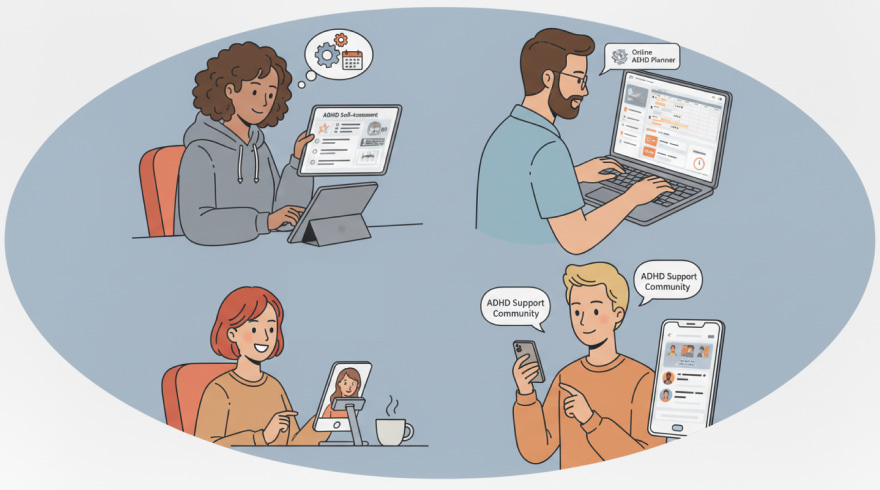
Online ADHD Test for Adults: Benefits and Next Steps
- 9 December 2025
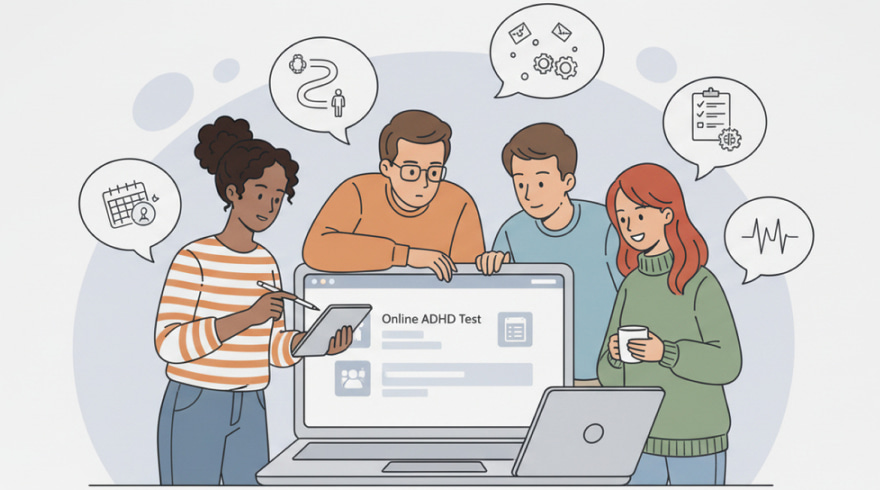
What Adult ADHD Looks Like Today and Why Digital Screening Matters
Many adults live for years navigating distractibility, time blindness, and inconsistent focus without realizing a neurological pattern sits underneath those hurdles. Modern life amplifies the friction: endless notifications, multitasking workplaces, and complex household logistics. When attention and executive functioning misalign with these demands, confidence can waver and burnout creeps in. That’s why accessible, structured screening has become a vital doorway to clarity.
Beyond a basic checklist, contemporary tools weave together validated rating scales, contextual questions, and guidance on interpreting patterns without pathologizing personality. In this evolving landscape, the flexibility of telehealth reduces friction that often blocks first steps. For many busy professionals and caregivers, the most significant barrier is simply getting started, and that’s where the convenience of online ADHD testing for adults can lower the threshold to act while preserving momentum toward care.
Importantly, the goal is not to label every quirk but to spotlight clusters of symptoms that align with diagnostic frameworks and everyday struggles. When the signal is strong, results can streamline conversations with licensed clinicians and speed up comprehensive evaluation. For those feeling stuck between doubt and self-advocacy, a structured screener like an adult ADHD test online can act as a catalyst, prompting targeted next steps rather than indefinite uncertainty.
How Digital ADHD Screeners Work and What to Expect
Most platforms start with a guided intake that maps everyday scenarios, work output, task initiation, memory lapses, and impulsive decisions, against standardized scales. You’ll see questions anchored in frequency and impact, because consistency across contexts matters as much as intensity. Good tools also ask about sleep, mood, and stress, since overlapping issues can masquerade as attention challenges.
After completing a structured questionnaire, you’ll typically receive scores organized by symptom clusters, sometimes with narrative feedback and practical suggestions. Those insights are not a formal diagnosis; they’re a decision-support layer that helps you decide whether to pursue a fuller clinical evaluation. For individuals wanting a quick pulse check before booking a professional consult, a well-designed result summary, especially one produced by an ADHD test online adults, can clarify if patterns are significant enough to investigate further.
Expect strong privacy language, transparent data practices, and clear disclaimers. Many services also provide guidance on documentation you can bring to an appointment. If you prefer more depth, a platform that offers a multi-instrument battery or a clinician-reviewed screen, features often associated with an ADHD online assessment for adults, can enhance confidence in the next steps you choose.
- Plan 10–25 minutes of uninterrupted time.
- Answer based on typical weeks, not your absolute best or worst days.
- Note coexisting concerns like anxiety, depression, or sleep issues.
- Save or download your results for future clinical conversations.
Benefits, Limitations, and When to Seek Professional Help
Digital tools shine by reducing friction: no commute, no waitlist just to get a preliminary picture, and no pressure to self-explain symptoms from scratch. For many, the momentum of a quick screening helps overcome decisional paralysis, turning abstract concerns into actionable data. Personalized suggestions can also seed micro-habits, like externalizing reminders or time-blocking, that start improving daily function even before formal care begins.
Still, limitations matter. Self-report bias can skew findings, and overlapping conditions may complicate interpretation. Nuances like developmental history and functional impairment across domains benefit from clinical interviewing. If your results are consistently elevated, especially in conjunction with childhood patterns of inattention or hyperactivity, discussing them through an adult ADHD diagnosis online pathway can accelerate access to a comprehensive evaluation with licensed professionals.
Certain scenarios warrant extra caution: sudden changes in cognition, severe mood symptoms, or significant substance use require clinical triage before focusing on attention specifically. When in doubt, escalate rather than delay. If you already have prior testing but need an updated perspective tied to current goals, a service offering an adult ADHD online diagnosis review can help connect historical records with present-day function, ensuring recommendations match your life now.
- Use screeners as a first step, not a final verdict.
- Prioritize platforms that explain score meaning and next actions.
- Bring your results to a licensed clinician for full interpretation.
Comparing Options, Timeframes, and Costs
The marketplace blends quick self-guided quizzes with clinician-reviewed assessments and end-to-end care platforms. Turnaround time ranges from instant summaries to 48–72 hours for reviews. Pricing spans free screeners to paid bundles that include evaluation and follow-up, and insurance coverage varies widely. Clarity comes from understanding the trade-offs between speed, depth, and clinical involvement.
Some people start with an initial screener to get a directional signal before investing in a more detailed pathway. Others prefer a platform that can handle the entire continuum, from intake to evaluation to care, so progress isn’t lost between providers. If you are testing the waters, a no-cost option like a free online ADHD test adults can provide a low-risk entry point, helping you decide whether to pursue a richer assessment soon afterward.
| Feature | What It Means | Why It Matters |
|---|---|---|
| Screening Depth | Single questionnaire vs. multi-instrument battery | Deeper batteries can reduce false positives and add nuance |
| Turnaround | Instant algorithmic score vs. clinician review in 1–3 days | Faster is convenient; reviewed results may increase confidence |
| Cost | Free, subscription, or bundled evaluation packages | Budget planning and insurance use depend on transparency |
| Data Privacy | Encryption, storage policy, and data-sharing rules | Protects sensitive health information and future use |
| Follow-Up | Self-help tips vs. warm handoff to licensed providers | Ensures momentum from screening to tangible support |
Score reports should explain what numbers represent and how to talk about them in appointments. If you need a rapid signal before a busy season at work, you might opt for a lightweight screener like an online test ADHD adults result, then schedule a more comprehensive evaluation once bandwidth opens up. This staged approach preserves urgency without sacrificing depth when it counts.
Preparing for Assessment and Moving Into Care
Good preparation makes assessments more accurate and care more effective. Gather school reports if available, jot down patterns your friends or partner have noticed, and track a typical week’s routines. Small details, missed deadlines, repeated rereads, impulse purchases, constant tab switching, paint a precise picture of functioning that numbers alone can’t capture.
Next, consider your goals: steadier focus, calmer mornings, or clearer prioritization at work. Practical supports, behavioral strategies, coaching, and environmental tweaks, often provide immediate relief. When appropriate and clinically indicated, medication management is best handled by a licensed prescriber within a structured care program. If you want continuity from screening to treatment, a platform that offers online adult ADHD treatment can shorten the gap between insight and action by coordinating care under one roof.
Care that respects whole-person context works best, sleep hygiene, stress management, and routines complement any plan. If you prefer virtual continuity, choose a provider who can engage through telehealth and asynchronous support. For many busy adults, a pathway that integrates evaluation and ongoing care makes adherence simpler, especially when it includes ADHD treatment for adults online options that fit around work and family commitments.
- Bring concrete examples of challenges and successes.
- Set two or three specific goals to guide your plan.
- Confirm how follow-up will be handled and by whom.
- Ask about evidence-based strategies you can start immediately.
FAQ: Common Questions About Adult ADHD Test
Is a digital screener the same as a diagnosis?
No. Screeners highlight patterns that might warrant a full evaluation by a licensed clinician. For a deeper pathway, platforms that support online ADHD assessment adults can help you connect preliminary results with comprehensive next steps.
How accurate are these tools?
Quality varies. Validated instruments and clear explanations improve reliability, but self-report bias and comorbid conditions can affect scores. Use results to guide a conversation with a professional rather than as a final verdict.
What should I prepare before taking a test?
Set aside quiet time, reflect on typical weeks, and gather examples of work or daily-life challenges. Including partner or colleague observations can provide useful external perspective for your clinician later.
Will I get help after I finish the test?
Many services offer next steps, from practical tips to referrals to licensed providers. For a streamlined experience, some platforms extend the process into care, while others focus solely on screening.
Can I rely on a quick quiz if I’m very busy?
A brief screener can be a helpful starting point, especially when your schedule is tight. If the result suggests significant patterns, consider booking a fuller evaluation after completing an ADHD adults test online to maintain momentum toward care.
Latest News
-
![A Comprehensive Guide to Online ADHD Self-Assessments for Adults]()
- 8 December, 2025
-
![Ultimate Guide to Free ADHD Self-Screening: How to Use Digital Tools Wisely]()
- 5 December, 2025
-
![Comprehensive Guide to Online Adult ADHD Diagnosis and Care]()
- 4 December, 2025