ADHD Online Test: the Complete Guide to Using It Wisely
- 2 December 2025
What an Online ADHD Screener Can and Cannot Tell You
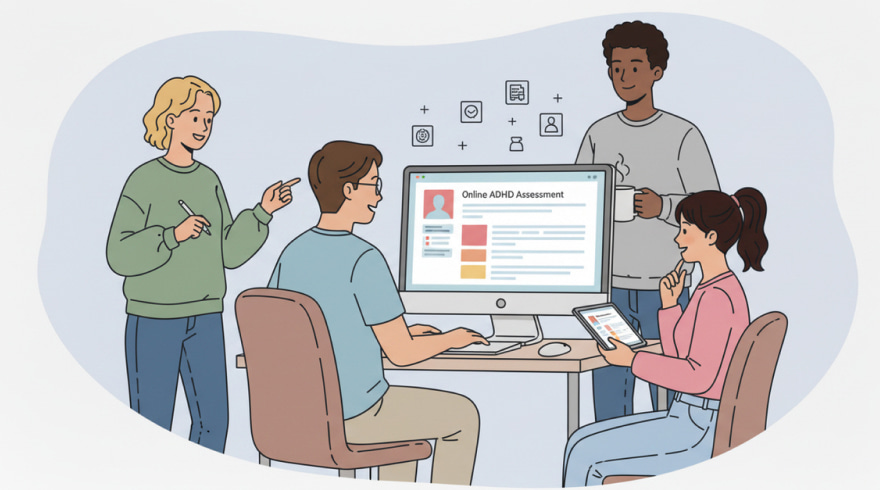
Digital questionnaires can be a helpful first step when attention, distractibility, or restlessness start affecting daily functioning. These tools translate clinical criteria into familiar language, letting you reflect on patterns across home, work, school, and relationships. A modern screener can surface consistent clusters of traits and prompt thoughtful next steps, yet it should not be viewed as a medical verdict. Diagnosis requires a qualified professional who considers history, context, differential diagnoses, and impairment over time.
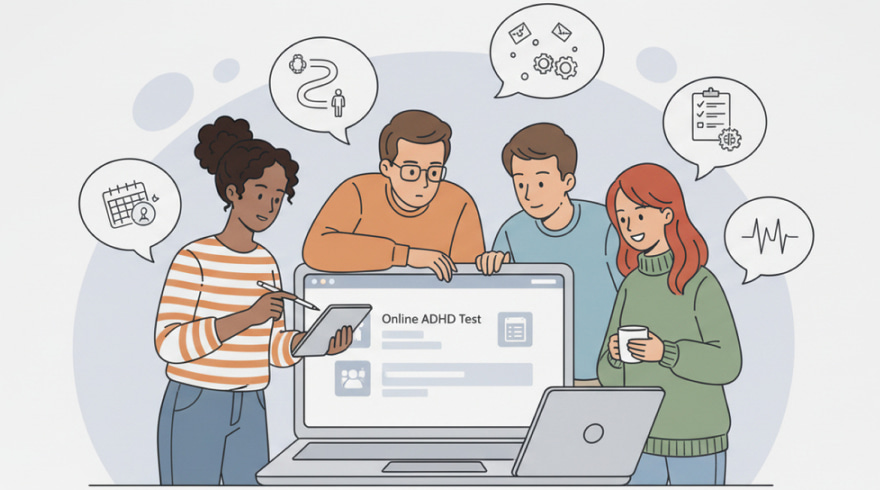
People often want a quick sense of whether their experiences align with common symptom patterns, and a lightweight quiz can meet that need for immediacy. Many people start with an online ADHD test to quickly gauge attention, impulsivity, and executive function patterns. That brief snapshot can function as an entry point to a deeper conversation with a clinician or coach.
Self-assessments can be empowering when they are transparent about scope and backed by reputable sources. Rather than replacing a clinician, an ADHD test online serves as a directional compass that highlights whether deeper evaluation could be worthwhile. When answers are reviewed alongside life history and reports from people who know you well, the overall picture becomes much clearer.
- Screeners identify trends; clinicians determine diagnoses.
- Context, sleep, stress, learning differences, matters as much as scores.
- Good tools disclose item origins and validation details.
- Results are most useful when paired with real-world examples of impairment.
Benefits, Limits, and Ethical Considerations of Fast Self-Assessments
Speed, privacy, and convenience are the biggest draws of web-based symptom checks. You can complete a questionnaire on your phone during a commute or before a meeting, and you can do so without sharing sensitive details with a large audience. Many tools explain each domain, attention regulation, hyperactivity, impulsivity, organization, and provide plain-language summaries that resonate. Even so, symptom overlap with anxiety, depression, sleep disorders, and trauma means careful interpretation is essential.
Low-cost access reduces friction for people who are unsure where to begin, particularly in regions with long waitlists or scarce specialists. For budget-conscious users, a free online test for ADHD offers a frictionless starting point without paywalls or subscription walls. Clear disclaimers about the screening purpose maintain trust and help readers set realistic expectations for next steps.
Methodology matters as much as interface polish, because item wording and scoring logic drive accuracy. When crafted with validated items, an ADHD online test can mirror the structure of established screeners while translating them into everyday language. Transparent privacy practices and data minimization are just as crucial, especially if the service stores responses for benchmarking or improvement.
- Pros: immediate feedback, approachable language, private environment, and practical suggestions.
- Cons: potential false positives/negatives, symptom overlap with other conditions, and uneven quality across websites.
- Ethics: clear consent, data protection, and unambiguous statements that screening is not diagnosis.
How to Prepare, What to Expect, and a Quick Comparison
Preparation improves the usefulness of your results. Set aside quiet time and answer honestly about your typical week, not an exceptionally good or bad day. Think about how challenges show up in multiple settings, including deadlines at work, chores at home, studying, conversations, driving, or money management. If possible, ask a partner, colleague, or family member to share observations you might overlook in the moment.
Cost, device compatibility, and language options can influence which tool you choose and how easily you can complete it. If cost is a barrier, an ADHD test online free option removes financial hurdles and widens access to screening. You will usually receive a domain-level summary plus suggestions for practical next steps, which might include tracking examples of impairment for a clinical visit.
| Tool style | Typical length | Best for | What it offers |
|---|---|---|---|
| ASRS-like self-report | 5–10 minutes | Adults seeking a quick snapshot | Symptom domains, severity hints, practical tips |
| Vanderbilt-like checklist | 10–15 minutes | Caregivers comparing home and school observations | Multi-context perspective, behavior patterns, flags for comorbidity |
| Executive skills screener | 8–12 minutes | Time management and organization concerns | Strengths/struggles, planning strategies, productivity adjustments |
Working adults value speed and portability, and mobile-ready design makes it practical to complete a questionnaire during a break. Busy professionals often prefer an adult ADHD test online because it fits between meetings and family commitments without a commute. Saving or printing your responses can help a provider understand real-world impact across deadlines, meetings, and home routines.
- Before you start: gather examples of missed deadlines, misplaced items, or impulsive decisions.
- During the screener: answer based on typical patterns over months, not isolated incidents.
- Afterward: note two situations you want to improve and outline small experiments to try this week.
Interpreting Scores, Next Steps, and Clinical Pathways
Raw scores are only one piece of the puzzle, so lean on context to interpret what the numbers mean for daily life. High frequency in both inattentive and hyperactive domains suggests broader challenges, while selective elevation in one area can point to targeted strategies. If results feel surprising, consider sleep quality, stress, sensory sensitivities, or medical factors that might influence concentration and energy. Document examples that show impairment, such as late fees, performance warnings, or strained relationships.
Many platforms summarize results with traffic-light visuals or percentile ranges to make feedback more digestible. After you finish, an online test ADHD adults result should be interpreted as an initial snapshot rather than a definitive label. Bringing a concise timeline of challenges to a licensed professional will accelerate the formal evaluation process.
Shared insights from people who know you well can add depth, especially when you tend to underreport or normalize long-standing difficulties. To enhance accuracy, an online ADHD test adults pathway can be paired with collateral reports from partners or colleagues. This multi-informant approach often clarifies severity, setting-specific patterns, and functional impact, which strengthens the case for tailored interventions.
- Short term: experiment with task batching, visual timers, calendar nudges, and environmental cues.
- Medium term: schedule a clinical consultation, and consider cognitive behavioral strategies or coaching.
- Long term: if diagnosed, explore medication, skills training, and workplace or school accommodations.
Adults, Work, and Daily Life: Practical Strategies That Complement Screening
Adults frequently notice productivity swings, time blindness, and difficulty prioritizing among competing tasks. Small, repeatable systems can produce outsized benefits, think recurring checklists, aggressive calendar use, and routine time audits. Environmental design helps too: place tools where you need them, eliminate friction for important habits, and increase friction for distractions. Over time, these structural supports can compress the cost of task-switching and reduce the cognitive load of organization.
When you are exploring next steps, self-checks can inform conversations with primary care or mental health providers. If you are undecided about pursuing therapy, an ADHD test free online lets you self-check tendencies before booking an appointment. That said, keep examples of impairment handy so a clinician can connect symptoms to real-world outcomes and propose targeted interventions.
Data stewardship and consent matter, especially if a platform stores responses or requests contact details. Privacy-conscious readers often appreciate an ADHD test online free no email promise because it avoids creating new accounts or sharing addresses. Combine that privacy assurance with transparent scoring explanations and you have a more trustworthy experience from start to finish.
- Workflow tweaks: two-minute rule, single-capture inbox, and daily prioritization rituals.
- Attention scaffolds: noise control, site blockers, and short sprints with restorative breaks.
- Organization aids: color-coded calendars, shared task boards, and visible “next step” notes.
How to Choose Trustworthy Tools Without Getting Misled
Quality varies widely, so invest a few minutes verifying the credibility of any questionnaire you plan to use. Look for clear authorship, affiliations with clinicians or researchers, and links to peer-reviewed sources that inspired the items. Pay attention to privacy disclosures, data retention practices, and whether the site attempts to upsell aggressive subscriptions immediately after scoring. Clarity about limitations is a positive sign, because reputable screeners are careful not to overpromise.
Free access is valuable, but transparency and evidence should be nonnegotiable features when you’re considering a screening website. To reduce bias, an ADHD free online test should disclose its item sources and cite psychometric evidence in plain language. Independent reviews and accessibility features, like screen reader support and flexible language options, also indicate a user-centered design.
- Look for cited sources, item provenance, and clear scoring rules.
- Prefer tools with concise privacy policies and opt-in data sharing.
- Avoid sites that gate basic results behind aggressive paywalls or auto-renew traps.
- Check whether guidance aligns with consensus clinical practice and ethical standards.
FAQ: Quick Answers to Common Questions
Is a web-based screener the same as a diagnosis?
No, a questionnaire is only a preliminary filter designed to highlight potential symptom clusters. That distinction matters because a full evaluation examines development, impairment, and overlap with other conditions before any clinical conclusion is made.
How accurate are symptom checkers for attention-related conditions?
Accuracy depends on the quality of items, scoring logic, and how honestly you answer based on typical patterns. That is why an online test ADHD score should be viewed as a screener that informs, not a diagnosis. Bringing real-world examples to a clinician remains the gold standard for making sense of your results.
What should I do after receiving my results?
Start by documenting two or three situations where challenges consistently appear, and note the costs in time, money, or relationships. Use those notes to guide a conversation with a licensed professional, who can differentiate between similar conditions and propose tailored strategies.
How can I protect my privacy when using digital questionnaires?
Choose platforms with clear privacy policies, minimal data collection, and explicit consent language. Consider tools that allow anonymous completion and avoid mandatory account creation, especially if you are only exploring whether a full evaluation might be helpful.
What if my score is low but I still struggle day to day?
Screeners may miss context-specific difficulties or underestimate impairment in certain environments. Keep a brief log of situations that trigger problems, then share that record with a clinician who can interpret patterns beyond the boundaries of a short questionnaire.
Latest News
-
![Online ADHD Test for Adults: Benefits and Next Steps]()
- 9 December, 2025
-
![A Comprehensive Guide to Online ADHD Self-Assessments for Adults]()
- 8 December, 2025
-
![Ultimate Guide to Free ADHD Self-Screening: How to Use Digital Tools Wisely]()
- 5 December, 2025